
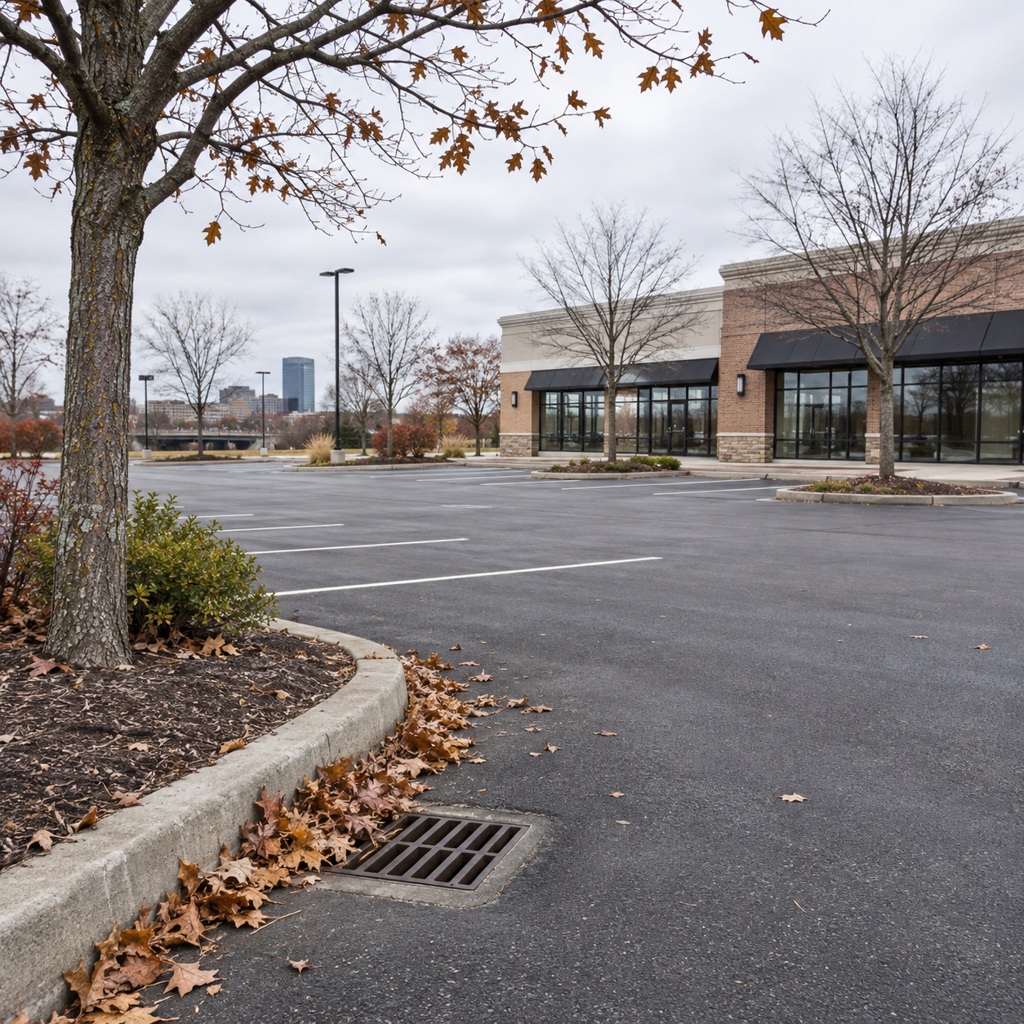
Leaf sweeping belongs in a Grand Rapids property’s fall maintenance plan before leaves become trapped beneath lasting snow. The useful question is not simply whether the parking lot looks untidy. It is where leaves collect, how quickly they return, and whether the next rain can carry them toward a drain. A targeted plan can keep the work manageable without treating every paved acre as equally urgent.
For West Michigan shopping centers, offices, and industrial properties, start with a site walk. Identify tree-lined parking rows, low corners, loading areas, and the routes people use between their cars and the entrance. Then make leaf sweeping part of a coordinated sequence with landscaping and routine pavement cleaning.
Start leaf sweeping with a map of the property
A simple marked aerial photo can be more useful than a vague request to clean the entire site. Mark each surface drain, the curb lines feeding it, pedestrian crossings, and the rows shaded by mature trees. Include service drives behind buildings, where leaves can accumulate without being visible from the main entrance.
Separate ordinary scattered leaves from deep piles or mixed debris. Those conditions may require different handling, equipment, or disposal arrangements. Tell the contractor about low clearances, narrow turning areas, damaged pavement, and gates. Good leaf sweeping starts with a scope that reflects the actual property rather than an assumption based on its street address.
Watch the weather and the trees together
The best service window depends on conditions at the site. A property with a few young ornamental trees may need a different approach from a lot bordered by mature maples. Wind can also move material from an adjoining parcel into previously clear parking stalls.
Use leaf sweeping visits to address current accumulation, then reassess after a substantial new drop. Avoid waiting for every tree to become bare if the drain approaches are already covered. Grand Rapids reminds property owners to keep leaves away from storm drains. That practical priority is more useful than relying on one fixed cleanup date.
Do not interpret a forecast as a guarantee that a contractor can safely work at a particular hour. Rain, ice, access, and equipment suitability can change a planned visit. Agree on who will confirm conditions and authorize a revised service window.
Coordinate landscaping before the final pass
Leaf sweeping works best when the landscaping crew and sweeping provider know each other’s schedule. If planted areas will be cleared immediately after the pavement service, newly moved material may undo part of the work. Arrange the order in advance and specify where collected landscaping debris belongs.
Blowing a problem from a sidewalk to a neighboring property or toward a storm drain does not complete the job. Ask for collection and appropriate removal as part of the agreed scope. Keep bagged yard waste, loose litter, and bulky branches separate where the disposal arrangements require it.
For example, consider a hypothetical office lot with trees along one edge and a delivery lane behind the building. The site may need concentrated work on the tree-lined curb, manual attention near entrances, and a final equipment pass through the accessible pavement. This is a planning example, not a claimed ACS customer result.
Make access part of the leaf sweeping plan
Parked vehicles can leave strips of untouched material beside wheel stops and curbs. For an occupied property, identify whether selected rows can be emptied in stages. Tell tenants which spaces must remain available and when they can return. Preserve necessary pedestrian access throughout the work.
Delivery schedules matter too. A service truck arriving at the same time as a loading-dock delivery can prevent either operation from proceeding efficiently. Share known restrictions, including school pickup traffic, tenant opening hours, and waste collection. Leaf sweeping should fit the property’s operating pattern instead of relying on the crew to discover every conflict on arrival.
Define what completion should look like
An effective leaf sweeping checklist can be short and specific:
- Remove accessible leaf accumulation along the identified curb lines.
- Address pavement approaches to surface drains without opening or entering drainage structures.
- Include the agreed pedestrian edges and loading areas.
- Identify parked-car obstructions or areas that could not be completed.
- Confirm how collected material will be removed and where it will go.
Surface cleaning and drainage repair are different tasks. If water remains after visible debris is removed, report the condition for assessment. A collapsed pipe, damaged inlet, or grading issue needs a different response. Do not promise that one sweeping visit will solve every standing-water problem.
Keep a useful record through the end of fall
After leaf sweeping, take photos from the same few locations used during the initial walk. Record the date, inaccessible rows, remaining tree cover, and any areas needing separate attention. That gives the next person managing the property a clear reference instead of a general impression that the work was done.
A brief follow-up inspection after another windy period can show whether the current service interval still fits. Adjust according to observed accumulation. This is especially useful for multi-tenant properties, where landscaping, pavement care, and tenant responsibilities may belong to different contracts.
Build a practical plan with ACS
ACS Sweeping Services provides parking lot sweeping in Grand Rapids and West Michigan and describes its approach as personalized pavement maintenance. Use that conversation to explain the property’s tree cover, parking restrictions, and drainage priorities rather than requesting a generic visit.
For leaf sweeping that fits your site, request a quote from ACS Sweeping Services. Bring the site map, preferred service window, and photos of the areas that collect material fastest. A clear starting scope makes it easier to arrange useful fall cleanup and carry an organized maintenance plan into winter.